Embarking on the journey to secure admission to top universities in the USA is an exciting yet challenging endeavor. The pursuit of academic excellence and the dream of joining prestigious institutions drive countless students worldwide. If you find yourself navigating this path, you’re in the right place.
In this blog, we will explore invaluable tips that can significantly enhance your chances of gaining admission to some of the finest educational establishments in the United States.
But before we delve into the strategies that can make your application stand out, let’s acknowledge the importance of proper guidance and academic preparation. At Ignite Training Institute, we understand the significance of a strong academic foundation.
As a leading tutoring institute, we offer unparalleled support for IB, IGCSE, A-Levels, and AP programs. Our commitment is not only to academic excellence but also to empowering students to achieve their aspirations, including securing admission to top-notch universities.
How To Get Admission In Top Universities In The USA? 10 Tips
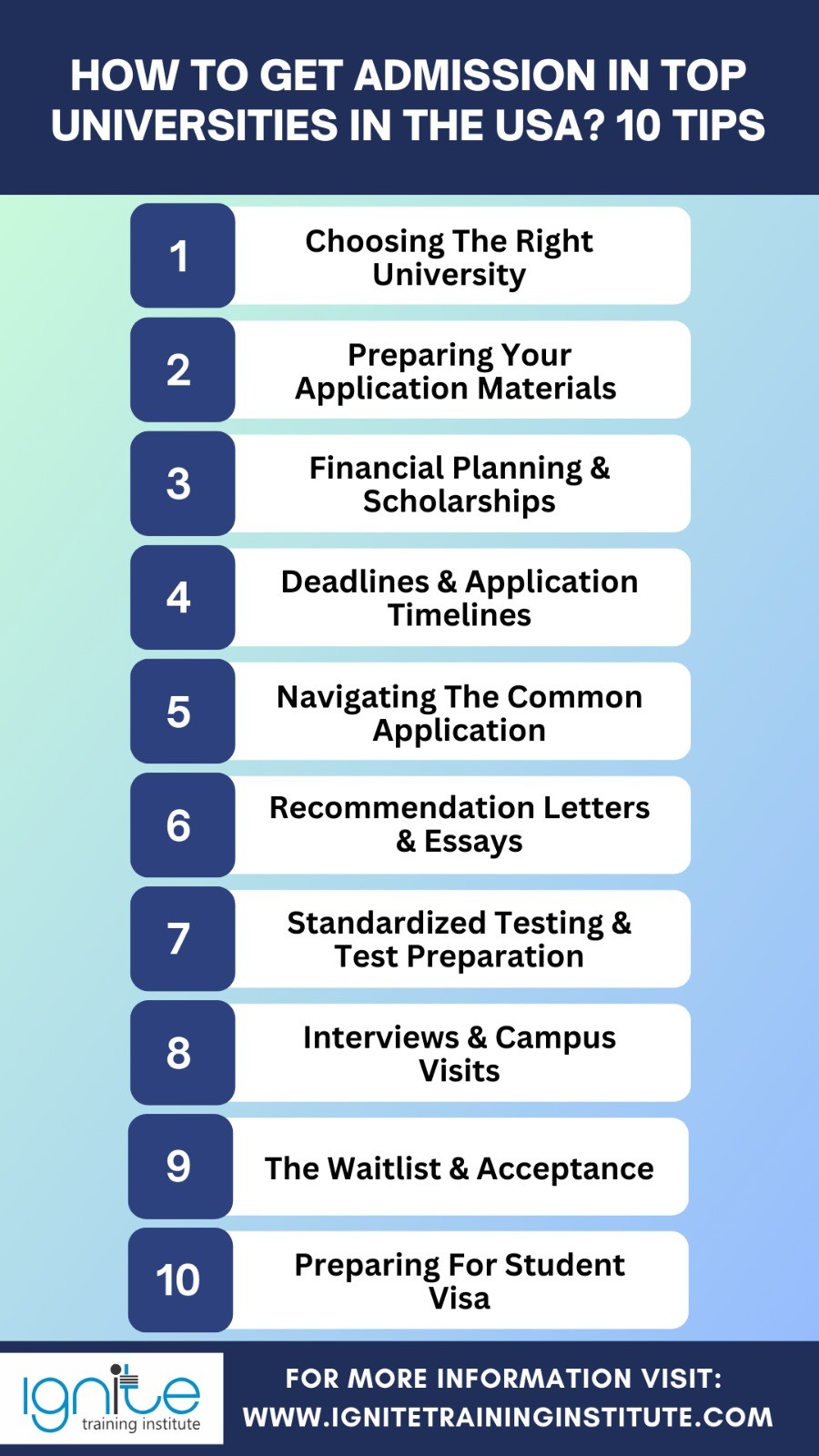
Unlocking the gateway to elite education in the USA requires strategic finesse. Dive into our guide offering 10 invaluable tips on navigating the competitive landscape, ensuring your seamless journey towards securing admission to the top universities.
1. Choosing The Right University
Choosing the right university is a consequential decision that profoundly influences your academic and personal growth. Begin by clarifying your educational goals, considering factors like program offerings, faculty expertise, and campus culture.
Assessing location, available resources, and extracurricular opportunities can further refine your choices. Seek firsthand insights through campus visits or virtual tours, and tap into alumni experiences for valuable perspectives.
Weighing the importance of class size, learning environment, and support services ensures a tailored fit. Ultimately, a holistic approach that aligns your ambitions with a university’s offerings will guide you toward a fulfilling and transformative academic experience.
2. Preparing Your Application Materials
Crafting compelling application materials is a crucial step in securing your spot at the university of your choice. Begin by meticulously reviewing admission requirements and tailoring your resume to highlight academic achievements, extracurricular activities, and relevant experiences.
Write a standout personal statement that reflects your unique qualities and aspirations, showcasing how you align with the university’s values and mission. Request recommendation letters early from individuals who can attest to your skills and character.
Pay careful attention to application deadlines and ensure all documents are polished and error-free. This meticulous approach to preparing your application materials will enhance your chances of standing out and leaving a lasting impression on the admissions committee.
3. Financial Planning & Scholarships
- Early Scholarship Research: Initiate scholarship exploration well before deadlines, considering both university-specific and external options.
- Understand Eligibility Criteria: Review each scholarship’s eligibility requirements, tailoring applications to meet specific criteria.
- Diversify Applications: Broaden your chances by applying to a variety of scholarships that align with your strengths.
- Create a Comprehensive Budget: Develop a detailed budget covering tuition, accommodation, meals, textbooks, and potential unforeseen expenses.
- Explore Financial Aid Options: Familiarize yourself with financial aid programs from the university, government, and private institutions.
- Consider Part-Time Work: Explore part-time job opportunities or internships to supplement your financial stability.
- Seek Financial Counseling Services: Utilize university-provided financial counseling for guidance on student loans, budgeting, and financial decision-making.
4. Deadlines & Application Timelines
- Identify Application Deadlines: Clearly note the application deadlines for each university you’re interested in, distinguishing between regular and early options.
- Create a Task Timeline: Develop a detailed timeline outlining tasks like drafting essays, securing recommendation letters, and completing required tests.
- Prioritize Early Applications: Consider the advantages of early action or early decision options, ensuring you meet their specific deadlines.
- Stay Ahead of Schedule: Aim to submit your application well in advance of the official deadlines to account for unforeseen delays.
- Understand Variations: Research and understand any variations in application timelines among different universities, adapting your plan accordingly.
5. Navigating The Common Application
- Create Your Common App Account: Start by setting up an account on the Common Application website to initiate the admission process.
- Research University Requirements: Thoroughly investigate the admission criteria of your target top universities, ensuring you understand their specific preferences and expectations.
- Compile Essential Information: Gather all necessary information beforehand, including academic records, standardized test scores, and details about extracurricular activities.
- Optimize The Application Dashboard: Efficiently use the Common App dashboard to manage and monitor your progress, ensuring that all sections are completed accurately and on time.
- Review And Edit Thoughtfully: Regularly review and edit your application components, paying close attention to detail, coherence, and the overall presentation before the final submission.
6. Recommendation Letters & Essays
- Build Strong Relationships: Cultivate relationships with teachers, mentors, or supervisors who can provide insightful and compelling recommendation letters.
- Request Letters Early: Ask for recommendation letters well in advance, allowing your recommenders ample time to craft thoughtful and personalized endorsements.
- Provide Relevant Information: Furnish your recommenders with detailed information about your academic achievements, extracurricular activities, and personal goals to help them tailor their letters.
- Craft Authentic Personal Essays: Write personal essays that authentically reflect your experiences, aspirations, and unique qualities, allowing admissions officers to connect with your story.
- Highlight Achievements And Impact: Showcase specific achievements and the impact of your experiences in both recommendation letters and essays to provide a comprehensive view of your capabilities and character.
7. Standardized Testing & Test Preparation
Securing admission to top universities in the USA often hinges on a strategic approach to standardized testing and thorough test preparation. Begin by researching the specific testing requirements of your target institutions, and understanding whether they prioritize the SAT, ACT, or both.
Devote ample time to comprehensive test preparation, utilizing resources like practice exams, study guides, and prep courses. Consider retaking tests if necessary, aiming for scores that align with or surpass the average accepted scores at your chosen universities.
Beyond raw scores, focus on enhancing your understanding of core concepts and refining test-taking strategies to showcase your academic prowess effectively. A well-executed standardized testing strategy is a pivotal component of a competitive application to top-tier universities in the USA.
8. Interviews & Campus Visits
Gaining admission to prestigious U.S. universities necessitates a strategic approach to interviews and campus visits. Enter interviews with meticulous preparation, underscoring academic accomplishments, extracurricular engagements, and alignment with the university’s values.
Demonstrate authentic enthusiasm and articulate future aspirations, substantiating a strong alignment with the institution’s mission. During campus visits, actively participate in information sessions, attend classes, and engage with current students to acquire a nuanced understanding of the university’s cultural fabric.
The personalized finesse of a well-prepared interview and a purposeful campus visit can effectively communicate genuine interest, leaving an indelible mark on admissions committees and fortifying your candidacy amidst the competitive admission milieu.
9. The Waitlist & Acceptance
1. Understand The Waitlist Dynamics: Recognize that being placed on a waitlist is not a rejection but an opportunity for potential acceptance later in the admission process.
2. Express Continued Interest Promptly: Respond promptly to a waitlist offer, expressing your continued enthusiasm for the university and providing any additional information that may strengthen your candidacy.
3. Explore Other Options: While on the waitlist, explore other admission offers and deadlines to ensure you have viable backup options.
4. Maintain Proactive Communication: Regularly communicate with the admissions office, expressing your ongoing interest, and providing updates on any relevant achievements or activities.
5. Prepare For Multiple Outcomes: Mentally prepare for both acceptance and rejection, acknowledge the uncertainty of the waitlist process, and be ready to make informed decisions based on the eventual outcome.
10. Preparing For Student Visa
- Receive Admission Offer And Form I-20: Secure admission to a U.S. university and obtain Form I-20, a crucial document issued by the university certifying your eligibility for a student visa.
- Pay SEVIS Fee: Complete the mandatory Student and Exchange Visitor Information System (SEVIS) fee payment, an essential step in the visa application process.
- Complete DS-160 and Schedule Interview: Fill out the online DS-160 form, schedule a visa interview at the U.S. embassy or consulate, and obtain the confirmation receipt.
- Prepare Documentation: Gather necessary documents including the DS-160 confirmation, Form I-20, passport, visa fee payment receipt, academic transcripts, and proof of financial capacity to cover expenses.
- Attend Visa Interview: Attend the scheduled visa interview, answering questions about your academic plans, ties to your home country, and financial stability to demonstrate your intent to comply with visa regulations.
Related: Top Universities That Accept IGCSE Certificates in USA & UK
Factors To Consider When Selecting A University
Consider these essential factors when choosing a university to ensure a personalized and enriching educational journey.
1. Academic Reputation
Delve into the university’s academic reputation by exploring global and subject-specific rankings. Consider the faculty’s expertise, research contributions, and overall academic standing. Look for a university that aligns with your academic goals and values.
2. Location & Campus Environment
Assess the university’s location, considering factors like climate, proximity to industries relevant to your field, and the overall vibe of the campus. Determine if you prefer an urban or rural setting, a large or small campus, and a community that fosters your personal and academic growth.
3. Program Fit & Specializations:
Investigate the specific details of academic programs. Examine course offerings, available specializations, and any unique features such as partnerships with industry leaders or experiential learning opportunities. Ensure the programs align with your career aspirations and provide the academic depth you seek.
4. Financial Considerations:
Evaluate the overall cost of attending the university, including tuition, fees, accommodation, and living expenses. Explore available financial aid, scholarships, or work-study opportunities to make an informed decision that aligns with your budgetary constraints.
5. Alumni Success & Networking Opportunities:
Research the success stories of alumni in your intended field. A strong alumni network can offer valuable connections, mentorship, and potential job opportunities. Consider universities with active alumni engagement programs and a network that aligns with your career goals.
6. Accreditation and Industry Recognition:
Verify that the university is accredited by relevant educational authorities. Check if the degree holds industry recognition and is widely accepted by employers. Accreditation ensures that the institution maintains academic standards and provides a quality education.
Related: Top Colleges That Accept IB Diploma In The USA, UK, & UAE
How To Align Your Academic & Career Goals
Discover effective strategies for aligning your academic pursuits with your career aspirations with these five insightful tips.
1. Self-Reflection And Goal Clarity: Begin by reflecting on your interests, strengths, and passions. Clearly define your long-term career goals, identifying the industries or professions that resonate with your aspirations.
2. Research And Choose A Relevant Major: Conduct thorough research on potential career paths related to your interests. Select a major that aligns with your career goals, ensuring it offers the necessary coursework and resources to prepare you for your chosen profession.
3. Seek Internships And Practical Experience: Pursue internships, co-op programs, or research opportunities in your field of interest. Practical experience provides insights into the industry, enhances your skills, and validates the alignment of your academic choices with real-world expectations.
4. Utilize University Career Services: Take advantage of career services provided by the university. Attend workshops, career fairs, and counseling sessions to receive guidance on aligning your academic path with your career objectives.
5. Build A Strategic Network: Establish a professional network by connecting with industry professionals, professors, and alumni. Networking can provide mentorship, open doors to opportunities, and offer valuable insights into aligning your academic and career goals effectively.
Related: Edexcel IGCSE Biology Syllabus – A Student’s Critical Guide
Understanding Admission Requirements
Navigate the intricate landscape of university admissions with a clear understanding of the essential admission requirements.
Embarking on the journey toward admission to a top-tier academic institution involves a meticulous understanding of the varied and often rigorous admission requirements. Let’s delve into the key components that form the backbone of admission criteria, providing prospective students with insights into the academic prerequisites and standardized assessments that universities commonly consider.
1. Academic Prerequisites: The Foundation Of Admission Criteria
A solid academic foundation is often the first criterion that admission committees evaluate. Prospective students must showcase a history of academic excellence, typically reflected in their high school transcripts.
Admission officers scrutinize the rigor of coursework, examining the types of classes taken and the grades earned. Demonstrating proficiency in core subjects related to the chosen field of study is paramount.
Aspiring students should pay careful attention to prerequisites specific to their desired programs, ensuring alignment with the academic standards set by the institution.
2. Standardized Tests: Assessing Aptitude And Potential
Universities often require standardized test scores as a benchmark for evaluating students’ aptitude and potential. Tests such as the SAT (Scholastic Assessment Test), ACT (American College Testing), and GRE (Graduate Record Examination) are commonly used in the United States.
These assessments are designed to measure critical thinking, mathematical reasoning, and writing skills. The weight given to standardized test scores varies across institutions, and prospective students should research the specific requirements of their target universities to adequately prepare for and excel in these assessments.
3. Language Proficiency: Bridging Communication Gaps
For international students and those whose primary language is not English, demonstrating proficiency in the English language is essential. This is typically assessed through standardized tests such as the TOEFL (Test of English as a Foreign Language) or IELTS (International English Language Testing System).
Achieving a satisfactory score assures universities that students can navigate coursework and communicate effectively in an English-speaking academic environment. Institutions often set minimum score requirements, emphasizing the importance of strong language skills in ensuring academic success.
4. Letters of Recommendation: Illuminating Character And Potential
Letters of recommendation provide a personalized dimension to a student’s application. These letters, usually written by teachers, mentors, or supervisors, offer insights into an applicant’s character, work ethic, and potential for success in a university setting.
Recommenders can shed light on a student’s academic achievements, extracurricular involvement, and personal qualities that make them well-suited for the academic environment. It is crucial for students to choose recommenders who know them well and can articulate a compelling narrative about their capabilities.
Related: What Is AP Chemistry Exam? A Student’s Guide To Prepare
Criteria For The Admission Process In US Universities Via The IB Or A-Levels
When applying to US universities, both the International Baccalaureate (IB) and A-Levels are considered prestigious academic qualifications that demonstrate a student’s academic abilities and readiness for higher education.
However, the admission process for students with IB or A-Levels varies slightly, based on the respective curriculum and the university’s specific requirements. Below is a guide to understanding the criteria for the admission process for both IB and A-Level students:
1. Academic Rigor & Course Selection
- IB Diploma: US universities value the rigorous nature of the IB program. Students should complete the full IB Diploma, which requires a mix of six subjects, including Higher Level (HL) and Standard Level (SL) courses. Most universities prefer students with a strong focus on Higher Level subjects, particularly in areas related to their intended major.
- A-Levels: A-Levels offer more specialization, with students typically focusing on three or four subjects that align with their chosen university major. US universities expect students to perform exceptionally well in their A-Level subjects, with grades ranging from A* to B being the most competitive.
2. Standardized Test Scores
While both IB and A-Levels are internationally recognized qualifications, many US universities still require or recommend standardized test scores like the SAT or ACT:
- IB Students: Universities may not always require SAT/ACT scores if the IB diploma and predicted scores meet their criteria. However, strong SAT/ACT scores can enhance the application, particularly for more selective schools.
- A-Level Students: SAT/ACT scores may also be optional for A-Level students, but a strong test result can support the academic record and highlight strengths in areas not covered by A-Level subjects.
3. Grade Requirements & Predicted Scores
- IB Students: US universities typically look for strong predicted IB scores, with a total score of 36+ (out of 45) being competitive for top-tier institutions. Individual HL subject scores should range between 6 and 7 for a competitive edge.
- A-Level Students: Predicted grades in A-Levels play a crucial role, with many top universities expecting grades of A* and A in relevant subjects. Students aiming for competitive majors like Engineering, Medicine, or Business should demonstrate excellence in subjects closely related to their chosen field.
4. Extracurricular Activities & Leadership
Both IB and A-Level students are encouraged to showcase their involvement outside the classroom. US universities place significant emphasis on a well-rounded student profile:
- IB Students: The IB’s CAS (Creativity, Activity, Service) component allows students to highlight their engagement in community service, leadership roles, and extracurricular achievements. This aligns well with the holistic admissions process in the US.
- A-Level Students: A-Level students should equally focus on presenting their extracurricular activities, leadership roles, volunteer work, and any other achievements that demonstrate their character, initiative, and contribution to society.
5. Essays & Personal Statements
- IB Students: Personal statements and essays are critical for IB students to reflect on how the IB curriculum has prepared them for university life. They can emphasize their skills in critical thinking, global awareness, and time management developed through the IB Diploma.
- A-Level Students: For A-Level applicants, essays and personal statements should illustrate their passion for their chosen subjects, their academic journey, and how their in-depth study in A-Levels aligns with their future goals in higher education.
6. Letters Of Recommendation
Both IB and A-Level students will need to submit letters of recommendation from their teachers. US universities expect these letters to provide insight into the student’s academic performance, character, and potential to succeed in a college environment.
- IB Students: Teachers often highlight a student’s interdisciplinary skills and adaptability, gained through the diverse IB curriculum.
- A-Level Students: Recommendations for A-Level students typically emphasize their in-depth knowledge of specialized subjects and their commitment to academic excellence.
7. Additional Considerations For Competitive Majors
- STEM Applicants: For STEM-focused programs, universities will look for strong HL subjects (for IB students) or A-level subjects such as Mathematics, Physics, Chemistry, or Biology. A competitive application will often require outstanding grades in these core subjects.
- Humanities Applicants: Students applying for majors like History, Literature, or Social Sciences should demonstrate strong writing and analytical skills, with IB students benefiting from the Theory of Knowledge (TOK) and Extended Essay components, and A-level students from their high-level critical engagement in relevant subjects.
8. Final IB Or A-Level Examination Results
US universities typically make conditional offers based on predicted IB or A-Level results. Once final exam results are released, students must meet the offer conditions to confirm their place. Failing to achieve the required grades could result in the offer being rescinded, so strong performance in final exams is crucial.
Related: IGCSE Accounting: Syllabus Overview & Key Takeaways
Benefits Of Studying In Top USA Universities For Students
Choosing to study at one of the top universities in the United States opens doors to an array of unparalleled opportunities that significantly enhance a student’s academic, personal, and professional life.
Known for their high standards of education, innovative research, and global reputation, top US universities attract students from across the world. Below are some of the key benefits that make studying at these prestigious institutions an appealing choice for students:
1. World-Class Education And Academic Excellence
- Cutting-Edge Curriculum: Top US universities are known for offering a rigorous and dynamic curriculum that is regularly updated to align with the latest industry trends and academic advancements. Students are exposed to both theoretical knowledge and practical applications, which fosters critical thinking and problem-solving skills.
- Renowned Faculty: Many top universities in the US have world-renowned professors and experts in various fields. Studying under these educators allows students to learn from the best minds and stay at the forefront of their disciplines.
- Innovative Research Opportunities: Students are encouraged to participate in groundbreaking research, often working alongside faculty on projects that contribute to advancements in science, technology, medicine, and the humanities.
2. Diverse Range Of Programs And Flexibility
- Variety Of Majors And Minors: US universities offer a wide range of academic programs across disciplines, allowing students to tailor their education to their interests. Whether in engineering, business, arts, or humanities, students have access to diverse areas of study.
- Interdisciplinary Learning: Many top institutions encourage interdisciplinary learning, where students can combine courses from different fields. For example, a student studying engineering might also take courses in business or economics to complement their degree.
- Flexibility In Learning Paths: Unlike many education systems, top US universities offer flexibility in course selection, giving students the freedom to explore different subjects before committing to a major.
3. Global Recognition And Prestige
- Internationally Respected Degrees: Degrees from prestigious US universities carry global recognition, giving graduates a competitive edge in the global job market. Employers around the world respect and value the academic rigor and comprehensive training that these institutions provide.
- Powerful Alumni Networks: Many top US universities boast extensive and influential alumni networks. These connections provide valuable mentorship, career guidance, and networking opportunities, helping students build relationships that can shape their future careers.
4. Access To Cutting-Edge Resources And Facilities
- State-of-the-Art Technology And Labs: Top universities in the US are well-funded, which means they offer access to the latest technology, research laboratories, libraries, and study facilities. These resources allow students to gain hands-on experience and conduct advanced research in their fields of interest.
- Innovation Hubs: Many of these institutions have dedicated innovation hubs and centers for entrepreneurship, providing students with the support to turn their ideas into successful businesses and startups.
5. Career Development And Job Opportunities
- Strong Industry Connections: US universities have strong relationships with leading companies, organizations, and institutions across various industries. This translates into ample internship and employment opportunities for students during and after their studies.
- Career Services And Support: Students benefit from extensive career services, including resume building, interview preparation, and job placement assistance. Top universities often host career fairs that bring industry leaders to campus, creating a bridge between students and potential employers.
- High Earning Potential: Graduates from top US universities tend to earn higher salaries compared to their peers from less prestigious institutions. The brand recognition of a top-tier degree opens up high-paying jobs in competitive industries such as finance, technology, consulting, and law.
6. Cultural Diversity And Global Exposure
- International Student Communities: Top US universities attract students from all over the world, offering a culturally diverse and inclusive environment. Studying alongside peers from different countries fosters a global mindset, encouraging cross-cultural collaboration and understanding.
- Study Abroad And Exchange Programs: Many universities offer study abroad opportunities, enabling students to spend a semester or more in another country. This further enriches their academic experience and enhances their global perspectives.
7. Personal Growth And Independence
- Developing Independence: Studying abroad in the US, especially at a top university, pushes students out of their comfort zones. They learn to manage their time, navigate new environments, and develop essential life skills that foster independence and self-confidence.
- Leadership And Extracurricular Involvement: US universities emphasize extracurricular activities, allowing students to engage in clubs, sports, and student organizations. These experiences help students develop leadership, teamwork, and communication skills that are invaluable in both personal and professional life.
8. Cultural And Social Enrichment
- Campus Life And Social Activities: The vibrant campus life at top US universities provides countless opportunities to engage in cultural, social, and sporting events. These activities create a well-rounded college experience, offering a balance between academics and recreation.
- Networking With Future Leaders: Top US universities are home to ambitious and talented students who often go on to become leaders in their fields. The connections made during university can lead to lifelong friendships and future business collaborations.
9. Post-Graduation Opportunities
- Work Opportunities In The US: After graduation, many international students are eligible for Optional Practical Training (OPT), allowing them to work in the US for a period, often in fields directly related to their degree. This provides valuable work experience in one of the world’s largest economies.
- Pathway To Permanent Residency: For students interested in long-term career prospects in the US, a degree from a top university can be an asset when applying for work visas or permanent residency through programs like the H-1B visa.
Top 10 Universities In The USA For Admissions
The top 10 universities in the USA for admissions are renowned for their academic rigor, global reputation, and competitive admissions processes. Institutions like MIT, Stanford, and Harvard lead the list, offering exceptional programs in technology, sciences, business, and humanities. Admission into these universities is highly selective, with applicants needing strong academic records, high test scores, and extracurricular achievements
- Princeton University
- Massachusetts Institute of Technology (MIT)
- Harvard University
- Stanford University
- University of California, Berkeley (UCB)
- University of Chicago
- Cornell University
- California Institute of Technology (Caltech)
- Yale University
- Johns Hopkins University
Related: Do AP Classes Count As College Credit? All You Need To Know
Ignite Training Institute – Best Tutors In Dubai For IB, IGCSE, A-Levels, & AP
Embark on an educational journey of excellence with Ignite, renowned as the best tutors in Dubai for IB, IGCSE, A-Levels, and AP. At Ignite, academic prowess meets personalized guidance, creating an environment where students thrive in their respective curricula.
With a team of dedicated tutors, Ignite ensures a tailored approach to each student’s needs, fostering holistic growth and success. Their commitment to educational excellence makes Ignite a premier choice for students seeking top-notch support in IB, IGCSE, A-Levels, and AP programs.
In Dubai, Ignite stands as a beacon of educational empowerment, providing the expertise and guidance necessary for students to surpass academic expectations and achieve their educational goals.
Related: How To Prepare For An English Essay Exam? 10 Must-Know Tips
FAQs
1. How Do I Get Admission to Top Universities?
Focus on strong academic performance, extracurricular activities, leadership, and a well-rounded application, including personal essays and recommendations.
2. How To Gain Admission To US Universities?
Meet the academic and standardized testing requirements, submit a compelling application with personal statements, and participate in relevant extracurriculars.
3. What GPA Do You Need For Top US Universities?
Most top US universities require a GPA of 3.7 or higher, though it can vary by school.
4. Is It Hard To Get Into US Universities?
It can be challenging depending on the university, as selective schools have rigorous admission criteria.
5. Which American University Has A 100% Acceptance Rate?
Some universities like Western Kentucky University have near or 100% acceptance rates.
6. How Much Percentage Is Required To Study In US?
Generally, a minimum of 60-70% in high school or equivalent is required, but this varies by university.
7. How To Get Into US Universities From India?
Clear standardized tests like SAT/ACT, meet academic requirements, submit applications with essays and recommendations, and apply for a student visa.
8. What Is The Hardest University To Get Into In The US?
Harvard University is often considered one of the hardest to gain admission to due to its low acceptance rate.
9. Is It Hard To Get USA Study Visa?
The process can be demanding, requiring proof of admission, financial stability, and intent to return after studies, but many students are successful.
10. Which American University Is Easiest To Get Into?
Universities like Utah Valley University are considered some of the easiest to get into due to high acceptance rates.
Conclusion

In summary, gaining admission to top US universities involves excelling in tests, crafting compelling applications, and conducting interviews. Navigating the Common Application, considering campus visits, and strategically handling waitlists are crucial. Aligning academic goals, preparing for visas, and selecting a university thoughtfully are key steps.
Success requires dedication, resilience, and a genuine passion for excellence. It’s a transformative journey demanding authenticity and continuous improvement, fostering both personal and academic growth on the path to educational aspirations.
Related: How To Revise For Business Studies GCSE? Proven 10 Tips