Embarking on the A-Levels Chemistry journey? Whether you’re following the AQA, Edexcel, or CIE syllabus, mastering this fascinating subject is both rewarding and challenging. With each examining board offering its unique approach and structure, students often find themselves seeking clarity and support to excel.
Navigating the intricacies of atomic structures, organic reactions, and thermodynamics can be daunting. But fear not! Understanding the nuances of your chosen A-Levels Chemistry syllabus is the first step towards achieving your academic goals.
At Ignite Training Institute, we understand the importance of personalized guidance and support. That’s why we offer specialized tutoring support tailored to A-Levels Chemistry for AQA, Edexcel, and CIE.
What Is A Levels Chemistry?
A Levels Chemistry is an advanced level of study in the field of chemistry, typically undertaken by students in their final two years of secondary education. It is commonly offered as part of the curriculum in many countries, including the United Kingdom and various international schools. A Levels Chemistry builds upon the foundational knowledge gained at the GCSE level and delves deeper into the principles and concepts of chemistry.
This rigorous academic course covers a wide range of topics, including atomic structure, chemical bonding, kinetics, thermodynamics, organic chemistry, and more. Students engage in theoretical learning alongside practical experimentation in laboratory settings, fostering a comprehensive understanding of chemical phenomena.
A Levels Chemistry aims to develop critical thinking skills, problem-solving abilities, and a deep appreciation for the role of chemistry in everyday life and scientific advancement. Completing A-Levels Chemistry often opens doors to various higher education and career pathways in fields such as medicine, engineering, pharmaceuticals, and environmental science.
Related: Edexcel A-Level Maths: Syllabus, Assessment, & Grade Boundaries
AQA A Levels Chemistry Overview
The AQA A Level Chemistry qualification stands as a comprehensive and demanding course meticulously crafted to equip students with an in-depth understanding of both the fundamental principles and practical applications of chemistry.
Esteemed by universities and employers, this A Level serves as a gateway to a plethora of academic pursuits and professional opportunities.
Course Breakdown:
The curriculum is structured around three main pillars, each encompassing key modules:
Physical Chemistry
- Atomic Structure
- Amount of Substance
- Chemical Bonding
- Energetics
- Kinetics
- Chemical Equilibria & Le Chatelier’s Principle
- Thermodynamics
- Redox Reactions
Inorganic Chemistry
- Periodicity
- Group 2: The Alkaline Earth Metals
- Group 7: The Halogens
- Properties of Period 3 Elements and their Oxides
- Transition Metals
- Reactions of Ions in Aqueous Solution
Organic Chemistry
- Introduction to Organic Chemistry
- Alkanes, Alkenes, and Alcohols
- Organic Analysis
- Optical Isomerism
- Aldehydes, Ketones, Carboxylic Acids, and Esters
- Aromatic Compounds
- Amines
- Polymers
- Amino Acids, Proteins, and DNA
Practical Skills Component
- Planning and Designing Experiments
- Conducting Experiments
- Analyzing and Interpreting Results
- Evaluating Experimental Procedures and Outcomes
Assessment Structure:
The assessment of the AQA A Level Chemistry qualification is multi-faceted, comprising both written examinations and practical evaluations:
- Paper 1: Encompasses topics from Physical and Inorganic Chemistry.
- Paper 2: Encompasses topics from Physical and Organic Chemistry.
- Paper 3: Focuses on practical skills, and data analysis, and includes questions spanning all areas of the curriculum.
Key Skills Enhancement:
Pursuing A Level Chemistry with AQA nurtures a suite of transferable skills beneficial across academic and professional landscapes:
- Analytical Skills: Proficiency in interpreting experimental data and theoretical constructs.
- Problem-Solving Skills: Aptitude to apply acquired knowledge to intricate problems and real-world scenarios.
- Practical Skills: Competence in conducting experiments, documenting observations, and formulating conclusions.
- Communication Skills: Capability to articulate complex concepts and research findings adeptly through written reports and oral presentations.
Related: A-Level Maths: Topics & Exam Preparation Tips For Student
CIE A-Levels Chemistry Overview
The AQA A Level Chemistry qualification offers an in-depth exploration of chemical concepts, fostering intellectual curiosity and equipping students with essential skills for academic and professional success.
Course Breakdown:
Explore a comprehensive course breakdown of CIE A=Levels Chemistry:
Physical Chemistry
- Chemical Energetics
- Electrochemistry
- Equilibria
- 2Reaction Kinetics
Inorganic Chemistry
- Group 2
- Chemistry of Transition Elements
Organic Chemistry
- 2Introduction to A Level Organic Chemistry
- Hydrocarbons
- Halogen Compounds
- Hydroxy Compounds
- Carboxylic Acids and Derivatives
- Nitrogen Compounds
- Polymerization
- Organic Synthesis
Analysis
- Analytical Techniques
Practical Skills Component:
The Practical Skills Component of CIE A-Levels Chemistry focuses on hands-on experimentation, honing students’ ability to conduct accurate observations, measurements, and analyses in the laboratory setting. Through practical work, students develop vital skills essential for understanding chemical concepts and real-world applications.
1. Cultivates An Informed Curiosity:
- Stimulates intellectual engagement and exploration.
- Fosters a lasting passion for learning and scientific discovery.
2. Life Skill Development:
- Equips students with essential practical abilities.
- Enhances academic performance and critical thinking.
3. Preparation for Future Endeavors:
- Provides foundational skills for university studies.
- Prepares students for professional environments and challenges.
Assessment Structure:
This Assessment Structure for CIE A-Levels Chemistry includes the following:
Paper 1: Multiple Choice
- Written exam: 1 hr 15 mins, 40 marks.
- Forty multiple-choice questions assessing AO1 and AO2.
- Based on the AS Level syllabus content.
Paper 2: AS Level Structured Questions
- Written exam: 1 hr 15 mins, 60 marks.
- Structured questions assessing AO1 and AO2.
- Based on the AS Level syllabus content.
Paper 3: Advanced Practical Skills
- Practical test, 2 hours, 40 marks
- Tests AO3 in a practical context.
- Based on the experimental skills in the Practical Assessment section of the Paper 3 syllabus.
Paper 4: A-Level Structured Questions
- Written paper, 2 hours, 100 marks
- Structured questions assessing AO1 and AO2.
- Based on the A Level syllabus content; knowledge of AS Level content is required.
Paper 5: Planning, Analysis, & Evaluation
- Written exam: 1 hr 15 mins, 30 marks.
- Structured questions assessing AO3.
- Based on the experimental skills of planning, analysis, and evaluation in the Practical assessment section of the Paper 5 syllabus. The context of the questions may extend beyond the syllabus content.
Key Skills Enhancement:
Pursuing A Level Chemistry with AQA fosters the development of a range of valuable skills, including:
- Analytical Skills: Proficiency in interpreting complex data and chemical phenomena.
- Problem-Solving Skills: Ability to apply knowledge to diverse and challenging scenarios.
- Practical Skills: Competence in designing, conducting, and evaluating experiments.
- Communication Skills: Capability to articulate findings and complex concepts effectively.
- Critical Thinking: Capacity to assess and critique scientific information and experimental procedures.
Related: A-Level Grading System Explained: From A* To E & Beyond
Edexcel A Levels Chemistry Overview
Embarking on the A-Level Chemistry journey involves mastering a diverse range of topics and assessment structures. Here’s a concise overview to guide students through the essential components of this challenging yet rewarding subject.
Course Breakdown:
Explore the comprehensive breakdown of the Edexcel A Levels Chemistry course curriculum.
- Atomic Structure & the Periodic Table – Students delve into a detailed model of atomic structure, enhancing their understanding of the Periodic Table.
- Bonding & Structure – Exploring various ways atoms bond and interact, students also learn about molecular shapes.
- Redox I – Introduction to Oxidation Numbers aids students in balancing chemical equations.
- Inorganic Chemistry & the Periodic Table – Focus on Group 1, 2, and 7 elements’ chemistry, including ion tests.
- Formulae, Equations & Amounts of Substance – Building on GCSE calculations, students encounter titrations and learn about experimental errors.
- Organic Chemistry 1 – Introduction to hydrocarbons (alkanes and alkenes), halogenoalkanes, and alcohols.
- Modern Analytical Techniques – Exploration of instrumental methods for detection and analysis, such as drug testing in sports.
- Energetics 1 – Study of energy changes in different reaction types, including those with indirect measurability.
- Kinetics 1 – Initial exploration of factors influencing chemical reaction rates.
- Equilibrium 1 – Preliminary study of factors affecting chemical reaction yields.
Assessment Structure:
This Assessment Structure for Edexcel A Levels Chemistry includes the following:
- Paper 1: (30%, 1hr 45m) – Advanced Inorganic and Physical Chemistry
- Examines Topics 1, 2, 3, 4, 5, 8
- Drawing on these topics: 11, 12, 13, 14, 15
- Paper 2: (30%, 1hr 45m) – Advanced Organic and Physical Chemistry
- Examines Topics 2, 3, 5, 6, 7, 9
- Drawing on these topics: 16, 17, 18, 19
- Paper 3: (40%, 2hrs 30m) – General and Practical Principles in Chemistry
- Covers all topics
- Questions may encompass multiple topics
- Includes questions on practical skills
Key Skills Enhancement:
Studying A-level chemistry through Edexcel cultivates essential competencies that are beneficial both academically and professionally:
- Data Interpretation: Mastery in deciphering intricate chemical data and phenomena.
- Solution-Oriented Thinking: Skill in utilizing acquired knowledge to address varied and complex situations.
- Experimental Proficiency: Adeptness in formulating, executing, and assessing experimental designs.
- Effective Communication: Ability to convey insights and intricate ideas clearly and persuasively.
- Analytical Thought: Aptitude to evaluate and scrutinize scientific data and methodologies critically.
Related: A Level Computer Science Course: A CIE & AQA Overview
How To Pass A Level Chemistry Exam With An A?

Successfully navigating the A A-level chemistry exam requires strategic preparation and targeted study. This comprehensive 10-point guide outlines key strategies to enhance your preparation and performance, setting the stage for achieving an A grade.
1. Master The Fundamentals:
- Deep Understanding: Grasp core concepts such as Atomic Structure, Chemical Bonding, and Reaction Mechanisms. Ensure you understand the ‘why’ behind the ‘what’ to apply knowledge effectively.
- Conceptual Clarity: Use diagrams, analogies, and real-world examples to enhance understanding and remember key principles.
2. Consistent Revision:
- Regular Review: Schedule regular revision sessions to revisit and reinforce topics, aiding long-term retention.
- Interactive Learning: Engage in active learning techniques like flashcards, quizzes, and group discussions to make revision more effective and engaging.
3. Practice Past Papers:
- Exam Familiarity: Solve past exam papers to familiarize yourself with the exam format, structure, and time constraints.
- Identify Weak Areas: Analyze mistakes and focus on improving understanding and application in areas of weakness.
4. Understand Assessment Objectives:
- Targeted Preparation: Align your study approach with the Assessment Objectives (AOs), focusing on Analytical, Problem-Solving, and Practical Skills.
- Exam Strategy: Prioritize high-scoring topics and questions that assess key skills to maximize marks.
5. Effective Time Management:
- Study Schedule: Create a structured study timetable, allocating sufficient time to cover all topics and practice papers.
- Pacing Practice: Practice time-bound exercises to improve speed and accuracy, ensuring timely completion of the exam.
6. Use Reliable Resources:
- Quality Materials: Utilize trusted textbooks, online resources, and revision guides to supplement classroom learning.
- Diverse Learning: Explore different resources to gain varied perspectives and deepen understanding of complex topics.
7. Develop Practical Skills:
- Hands-On Practice: Engage in laboratory experiments, ensuring practical proficiency and familiarity with essential techniques.
- Data Interpretation: Practice analyzing experimental data, drawing conclusions, and linking findings to theoretical concepts.
8. Seek Clarification:
- Ask Questions: Actively seek clarification from teachers, tutors, or peers on challenging topics or concepts.
- Group Study: Collaborate with study groups to discuss doubts, share insights, and learn from peers’ perspectives.
9. Create Study Notes:
- Concise Summaries: Compile clear and concise notes highlighting key points, formulas, and concepts for quick revision.
- Visual Aids: Use visual aids like mind maps, charts, and diagrams to organize information and aid memory retention.
10. Stay Calm & Confident:
- Positive Mindset: Adopt a positive attitude towards learning, manage exam stress, and maintain a balanced lifestyle.
- Mock Exams: Take mock exams under exam conditions to simulate the real exam environment, boosting confidence and readiness.
Related: A-Level Subjects & Choices For Best Subject Combinations
Ignite Training Institute – Best A-Level Chemistry Tutors In Dubai
Ignite Training Institute in Dubai is renowned for providing top-notch A Level Chemistry tutoring support, helping students excel in this challenging subject and achieve academic success. With a team of highly qualified and experienced A Level Chemistry tutors, Ignite offers personalized tutoring sessions tailored to each student’s learning style and pace.
The tutors are experts in the A Level Chemistry curriculum, covering topics ranging from atomic structure and chemical reactions to organic chemistry and analytical techniques.
Our state-of-the-art facilities and comprehensive study materials ensure that students receive the best possible support to understand complex concepts, improve problem-solving skills, and excel in A Level Chemistry exams.
Related: Top 10 A-Level Schools In Dubai: Recent Reviews & Insights
FAQs
1. Is Chemistry A Level Very Hard?
A-Level Chemistry can be challenging due to its depth and complexity, but with consistent effort and effective study strategies, it is manageable and rewarding.
2. Can I Get An A * In A Level Chemistry?
Yes, with dedicated study, effective preparation, and guidance, achieving an A* in A-Level Chemistry is attainable.
3. Which Is Harder A-Level Chemistry Or Biology?
Both A-Level Chemistry and Biology have their challenges, but the difficulty can vary depending on individual strengths and interests; generally, Chemistry is often perceived as more conceptually challenging due to its mathematical and abstract nature.
Conclusion
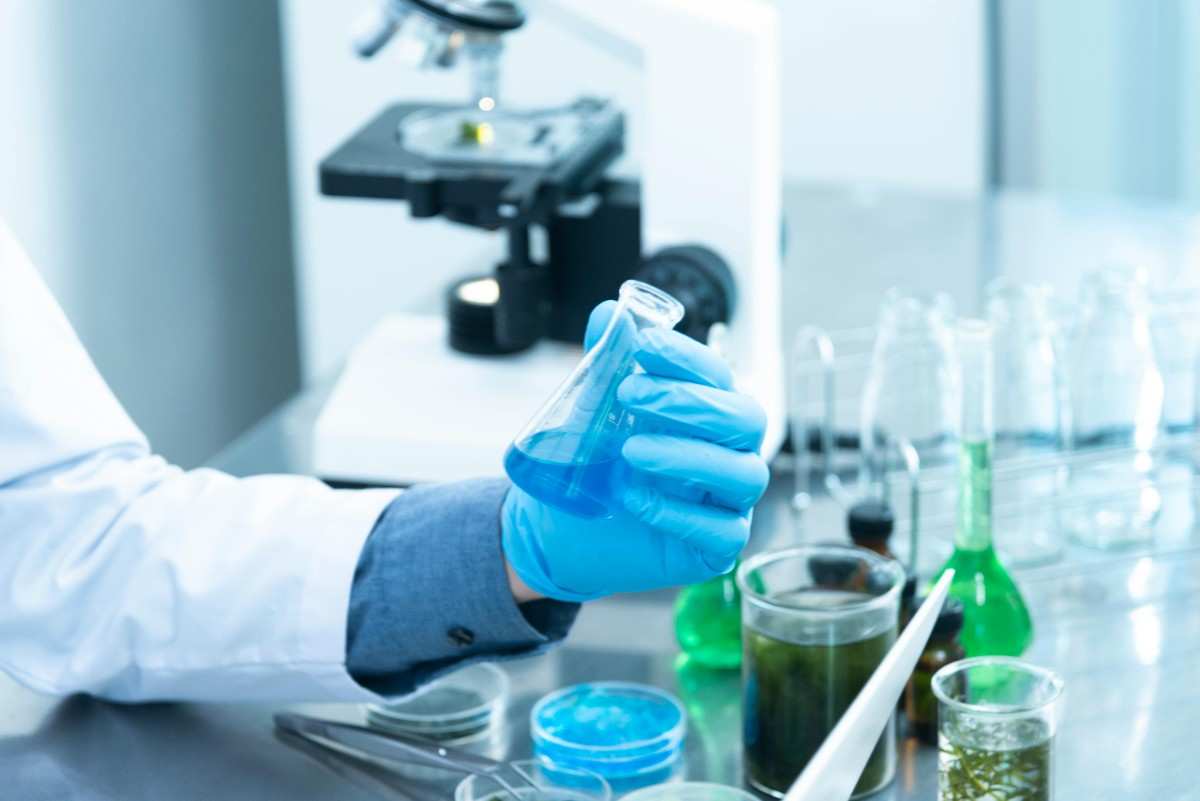
A Level Chemistry is a challenging yet fascinating subject that plays a crucial role in understanding the world around us at a molecular level. Whether you’re passionate about pursuing a career in science, medicine, engineering, or simply want to expand your knowledge in chemistry, mastering A Level Chemistry opens doors to a multitude of opportunities.
Related: A Level Maths Grade Boundaries Explained: A Number’s Guide