Deciding between Triple Science and Combined Science is an important choice for IGCSE students. Triple Science covers Biology, Chemistry, and Physics as separate subjects, offering a deeper understanding of each. Meanwhile, Combined Science merges these subjects into one course, providing a broad overview at a slightly easier pace. Both options have their benefits depending on the student’s interest and future academic plans.
For students passionate about science and aiming for careers in fields like medicine or engineering, Triple Science offers an ideal challenge. However, it requires more study time and effort due to the increased content. In contrast, Combined Science is suitable for students who prefer a more balanced workload while still receiving a solid grounding in all three sciences.
At Ignite Training Institute, students in the UAE can benefit from expert IGCSE tutors specializing in Triple and Combined Science. With a personalized approach and a focus on helping students reach their full potential, Ignite Training Institute stands out as the best option for those looking to excel in their IGCSEs.
Triple Science VS Combined Science: 5 Differences
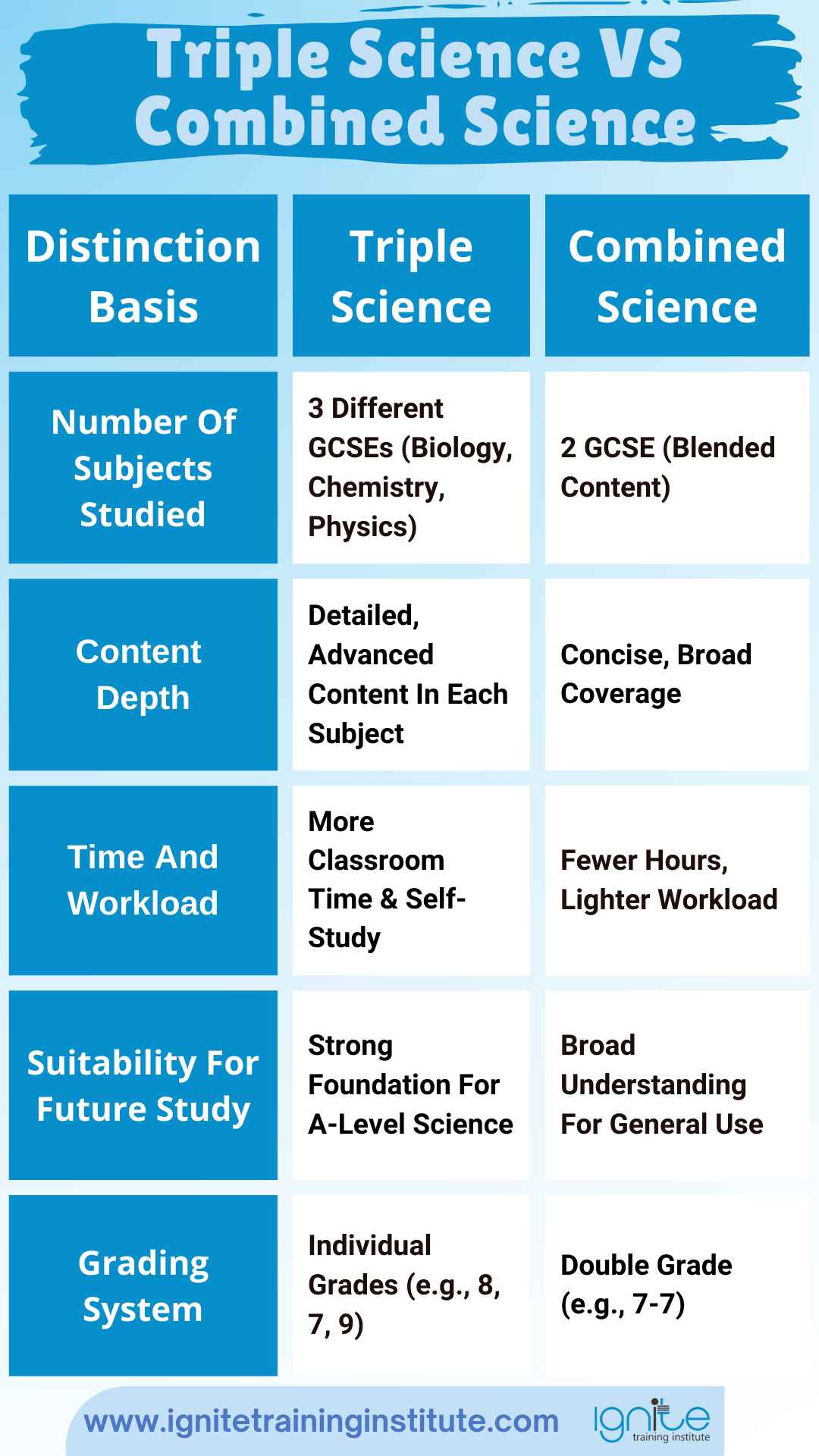
Choosing between Triple Science and Combined Science can be a crucial decision for students planning their academic future. Understanding the differences between them helps in making an informed choice.
1. Number Of Subjects Studied
- Triple Science: Students study all three sciences—Biology, Chemistry, and Physics—individually, receiving three separate GCSEs.
- Combined Science: Students study a blend of Biology, Chemistry, and Physics, but the content is condensed, leading to two GCSEs instead of three.
2. Content Depth
- Triple Science: Covers more detailed and advanced content for each of the three sciences.
- Combined Science: The curriculum is more concise, focusing on the key principles but with less depth in each subject.
3. Time And Workload
- Triple Science: Requires more classroom time and independent study due to the expanded syllabus across three subjects.
- Combined Science: Involves fewer teaching hours and a slightly lighter workload since students earn two GCSEs instead of three.
4. Suitability For Future Study
- Triple Science: Ideal for students interested in pursuing science at A-Level and beyond, as it provides a stronger foundation in each subject.
- Combined Science: Suitable for those who may not plan to specialize in science but still want a broad understanding.
5. Grading System
- Triple Science: Students receive individual grades for Biology, Chemistry, and Physics (e.g., 8, 7, 9).
- Combined Science: Students receive a double grade, which is an average of all the science components (e.g., 7-7, 6-5).
Both pathways offer valuable knowledge, but the choice depends on a student’s interest and future academic goals.
Related: IGCSE Chemistry: AQA, Edexcel, & CIE Exam Boards Insights
Overview Of Triple Science GCSE
Choosing the right GCSE science path is essential for students aiming to build a solid foundation for future studies. Triple Science GCSE provides an in-depth understanding of each scientific discipline.
1. Number Of Subjects Covered
- Triple Science: Students study Biology, Chemistry, and Physics as separate subjects, each leading to its own GCSE qualification.
- Combined Science: Students cover all three sciences but receive a single, combined grade for the two GCSEs awarded.
2. Detailed Curriculum
- Triple Science: The curriculum is comprehensive, with a detailed exploration of each science, including advanced topics and experiments.
- Combined Science: The curriculum is streamlined, providing a broader overview of key concepts across the three sciences but with less detail.
3. Classroom Time And Study Load
- Triple Science: Students typically have more classroom hours dedicated to science and are expected to engage in more extensive independent study.
- Combined Science: Involves fewer classroom hours and a reduced study load, as the syllabus is condensed into two subjects.
4. Preparation For Higher Education
- Triple Science: Offers a robust preparation for A-Level science courses and higher education, with in-depth knowledge in each discipline.
- Combined Science: Provides a solid foundation but is less detailed, which may be suitable for those not planning to specialize in science further.
5. Assessment And Grading
- Triple Science: Students receive individual grades for each subject—Biology, Chemistry, and Physics—allowing for more specific feedback on their performance.
- Combined Science: Students receive a double grade, reflecting their overall performance across all three sciences in a combined format.
Choosing Triple Science GCSE allows students to delve deeply into each scientific field, which can be particularly advantageous for those with a strong interest in science and ambitions for further study.
Related: IGCSE Physics: AQA, CIE, & Edexcel Exam Boards Overview
A Quick Look At Combined Science GCSE
The Combined Science GCSE is an integrated course that covers essential concepts in biology, chemistry, and physics. Designed for students aiming to gain a comprehensive understanding of science, this qualification combines all three subjects into a cohesive program.
Course Overview:
- Biology: Explore the fundamentals of living organisms, from cell biology to ecosystems.
- Chemistry: Delve into the properties of substances, chemical reactions, and the periodic table.
- Physics: Understand key principles of forces, energy, and wave phenomena.
Assessment: The course typically involves a combination of written exams and practical assessments, ensuring students have both theoretical knowledge and hands-on experience.
Why Choose Combined Science?
- Broad Foundation: Provides a well-rounded science education, ideal for those who enjoy science but do not wish to specialize in one subject.
- Versatility: Equips students with skills applicable to a range of scientific and non-scientific careers.
Pathways: Successful completion can lead to further studies in science-related fields or serve as a strong foundation for various career paths.
Related: How To Study For IGCSE Biology? 10 Must-Know Tips
Is Combined Science Easier Or More Difficult?
Is Combined Science easier or more difficult? Here’s a detailed look at various factors:
1. General Overview
Combined Science provides a broad introduction to Biology, Chemistry, and Physics. The integrated curriculum offers a comprehensive yet less detailed approach, which can make it more manageable for students who prefer a general overview rather than an in-depth study of each scientific discipline.
2. Workload
The workload for Combined Science is generally lighter compared to Triple Science. Students spend fewer hours in the classroom and have a reduced study load, as the content is condensed into two GCSEs. This can make Combined Science seem less demanding in terms of time and effort.
3. Exam Preparation
Exams for Combined Science cover a range of topics across the three sciences but with less depth than those in Triple Science. Students receive two grades that reflect their overall performance, which may simplify preparation compared to the three separate exams required for Triple Science.
4. Suitability
Combined Science is often considered more accessible for students who may not plan to specialize in science or who prefer a less intensive study path. It provides a solid foundation in the sciences without the detailed focus required by Triple Science.
5. Personal Preference
The perceived difficulty of Combined Science can vary depending on individual strengths and preferences. Some students may find the integrated approach and lighter workload easier, while others might prefer the detailed study of Triple Science.
Overall, Combined Science offers a streamlined approach to learning science, which can be easier for some students to manage. However, the difficulty will ultimately depend on individual learning styles and future academic goals.
Related: IGCSE Computer Science: Syllabus Overview & Paper Details
Triple Science GCSE Or Combined Science GCSE: Which Is A Better Choice?
Choosing between Triple Science GCSE and Combined Science GCSE involves considering various factors that align with your academic goals and interests. Here’s a detailed comparison to help you decide:
1. Depth Of Knowledge
- Triple Science: Offers a detailed and comprehensive study of Biology, Chemistry, and Physics. Ideal for students interested in a deep understanding of each scientific discipline.
- Combined Science: Provides a broader overview of all three sciences but with less detail, suitable for students who want a general understanding.
2. Future Academic Goals
- Triple Science: Recommended for students planning to pursue A-Level sciences or scientific careers. It builds a strong foundation and prepares students for advanced studies.
- Combined Science: Suitable for those who may not focus on science in higher education but still wish to cover the basics. It provides a solid grounding without the intensive focus.
3. Workload And Time Commitment
- Triple Science: Requires more classroom time and independent study due to the detailed curriculum for each science. More demanding in terms of time and effort.
- Combined Science: Involves fewer classroom hours and a lighter workload, making it more manageable for students with other commitments or varied interests.
4. Examination And Grading
- Triple Science: Students receive separate grades for Biology, Chemistry, and Physics. This allows for specific feedback and recognition of strengths in each subject.
- Combined Science: Students receive two grades that reflect their overall performance across all three sciences. Provides a general assessment rather than detailed feedback.
5. Suitability For Specialization
- Triple Science: Ideal for students who are certain about specializing in science in the future, as it provides in-depth knowledge and preparation.
- Combined Science: Better for students who may not specialize in science but want a balanced education in the subject areas.
6. Academic Stress
- Triple Science: May lead to higher academic stress due to the increased complexity and volume of content across three separate subjects.
- Combined Science: Typically results in lower academic stress due to the integrated approach and reduced content depth.
7. Career Aspirations
- Triple Science: Beneficial for students aiming for careers in fields such as medicine, engineering, or research, where detailed scientific knowledge is crucial.
- Combined Science: Suitable for students with diverse career aspirations who want a good science foundation but do not necessarily need detailed subject-specific knowledge.
8. Personal Interest
- Triple Science: Best for students with a strong interest in science who are motivated to engage deeply with the subject matter.
- Combined Science: Ideal for students who have a general interest in science but prefer a broader overview without the need for intense specialization.
In summary, if you are enthusiastic about science and plan to pursue it further, Triple Science might be the better option. If you prefer a more balanced approach with a lighter workload, Combined Science could be more suitable.
Related: Edexcel IGCSE Biology Syllabus – A Student’s Critical Guide
Ignite Training Institute: Best IGCSE Tutors In UAE
Ignite Training Institute is renowned for offering top-notch IGCSE tutoring in the UAE. With a team of highly qualified tutors, they provide personalized instruction that caters to each student’s needs, ensuring thorough preparation for exams.
The institute combines expert knowledge with innovative teaching methods, making learning engaging and effective. Their dedicated approach helps students understand complex concepts and build confidence.
Known for their excellence, Ignite Training Institute is a trusted choice for IGCSE preparation. Their tailored lesson plans and personalized attention equip students with the skills needed to excel academically.
FAQs
1. Is It Better To Do Combined Science Or Triple Science?
The choice between Combined Science and Triple Science depends on your academic goals and interests. Triple Science offers a more detailed study and is ideal for students aiming for advanced science education, while Combined Science provides a broader overview with a lighter workload.
2. What Are The Benefits Of Triple Science?
Triple Science offers a deep and comprehensive understanding of Biology, Chemistry, and Physics, leading to three separate GCSEs. It is beneficial for students who wish to specialize in science subjects or pursue science-based careers in the future.
3. What Is The Difference Between Science And Combined Science?
Triple Science covers Biology, Chemistry, and Physics in detail, resulting in three separate GCSEs. Combined Science integrates these subjects into a single curriculum, leading to two GCSEs, with a broader but less detailed approach.
4. What Percentage Of Students Take Triple Science?
Approximately 30% of students in the UK opt for Triple Science, although this percentage can vary depending on the school and region.
5. What Are The Disadvantages Of Combined Science?
Combined Science may lack the depth of study found in Triple Science, potentially leaving students with less detailed knowledge of each science subject. It may also limit preparation for advanced science studies.
6. How Much Harder Is Triple Science?
Triple Science is generally harder than Combined Science due to its in-depth coverage of each scientific discipline, requiring more classroom time and independent study. It involves more complex material and a higher workload.
Conclusion
Choosing between Triple Science and Combined Science depends on your academic goals. Triple Science offers a detailed study of Biology, Chemistry, and Physics, resulting in three separate GCSEs. It’s suited for students aiming for advanced science education.
Combined Science provides a broader overview of the three sciences with a lighter workload, leading to two GCSEs. This option is ideal for those who want a general understanding of science.
Triple Science is more intensive but advantageous for specialized study, while Combined Science offers a balanced approach with less academic pressure. Your decision should reflect your future aspirations.
Related: Best IGCSE Tutors In Dubai To Achieve Grade Excellence