Welcoming you to the dynamic realm of technology and intellectual exploration, the A-Level Computer Science course unfolds a captivating journey into the fundamental principles and practical applications that drive the digital age. As students embark on this academic adventure, mastering algorithms, programming languages, and system architecture, the significance of expert guidance becomes paramount.
Ignite Training Institute, is recognized as the #1 A-Level Computer Science tutoring support. Here, a team of highly qualified A-level tutors offers personalized sessions, propelling students beyond conventional learning to ensure not just exam success but also a profound comprehension of the ever-evolving landscape of computer science. At Ignite, we illuminate the path to excellence, shaping the tech leaders of tomorrow.
What Is A Level Computer Science Course?
The A Level Computer Science course is a rigorous and comprehensive program designed to provide students with a deep understanding of computer science principles and practices. Covering both theoretical concepts and practical applications, the course encompasses topics such as algorithms, data structures, programming languages, and system architecture.
Students engage in hands-on programming exercises to develop their coding skills and problem-solving abilities. Additionally, the curriculum explores key areas like software development, networking, and cybersecurity.
Through a combination of theoretical learning and practical projects, A Level Computer Science equips students with the knowledge and skills necessary for further studies in computer science or related fields, fostering a strong foundation for future careers in technology and innovation.
Related: Top 10 A-Level Schools In Dubai: Recent Reviews & Insights
CIE A-Level Computer Science Course Overview
The CIE A-Level Computer Science course is designed to equip students with a solid understanding of fundamental computer science principles, combining theoretical knowledge with hands-on programming skills.
- Course Overview (9608 or 9618): The CIE A-Level Computer Science course encompasses a diverse array of subjects, including information representation, communication, Internet technologies, hardware, software development, and relational database modeling.
- Computational Thinking And Programming Skills: The syllabus actively encourages the cultivation of computational thinking and programming skills, fostering the ability to address and solve complex computer science problems effectively.
- Comprehensive Foundation For University Studies: Offering a robust grounding in all facets of computer science, the course serves as a solid foundation for further studies in computing-related subjects at the university level.
- Flexible Duration And Entry Requirements: With a course duration of 24 months, it can be completed in less than a year. Notably, there are no prerequisites or prior qualifications required for entry.
- Assessment Structure: The assessment framework includes written exams and a practical component that evaluates programming skills, ensuring a well-rounded evaluation of students’ knowledge and capabilities.
- Qualification Attainment: Successful completion of all exam papers administered by CIE leads to the attainment of the qualification, validating the students’ mastery of the course content.
- Problem-Solving Principles: The syllabus places significant emphasis on understanding the main principles of problem-solving using software, data, hardware, communication, and people.
- Updated Syllabus And Examination Dates: The updated syllabus is applicable for examinations in June and November of 2021, 2022, and 2023. This ensures that the course content remains relevant and up-to-date with evolving industry standards.
- Resource Support For Teaching: The course is supported by a wide range of resources, facilitating effective teaching and planning. This aids educators in delivering a comprehensive and engaging learning experience.
- University Preparedness: Equipping students with a deep understanding of the subject matter and practical programming solutions, the course effectively prepares them for the challenges of university-level studies in computer science.
Related: A-Level Arts Subjects: A Guide To Choosing Class 11 Subjects
AQA A-Level Computer Science Course Overview
The AQA A-Level Computer Science course is designed to provide students with a deep understanding of the principles of computer science, programming, and computational thinking. This advanced-level course typically spans two years and is intended for students in their final two years of secondary education (Year 12 and Year 13 in the UK). The AQA A-Level Computer Science curriculum is structured to cover a range of topics, including theoretical foundations, practical programming skills, and an understanding of the social, legal, and ethical implications of computing. Course content overview is provided below:
Year 12: AS Level
Unit 1: Computing Principles
- Fundamentals of data representation.
- Computer systems architecture.
- Software development, programming, and problem-solving.
Unit 2: Algorithms & Problem Solving
- Algorithms: design and efficiency
- Elements of computational thinking
- Problem-solving and programming
- Practical Programming Skills
- Students will gain hands-on experience in programming using a suitable programming language (e.g., Python or Java).
- Practical programming tasks to reinforce theoretical concepts
Year 13: A-Level
Unit 3: Programming Project
- Individual programming project
- Analysis, design, implementation, testing, and evaluation of a solution to a real-world problem
- Students choose a suitable problem, document the project, and produce a working solution
Unit 4: Computer Systems and Programming
- The structure of the CPU
- The functions of the operating system
- High-level programming languages and their translators
- Low-level languages and assembly languages
- Databases and networking
Unit 5: Theoretical Fundamentals of Computer Science
- Finite-state machines
- Computability and Turing machines
- Computational complexity
Assessment
The AQA A-Level Computer Science course is assessed through written examinations and a programming project. The exams include a mix of multiple-choice questions, short-answer questions, and extended responses. The programming project is internally assessed and externally moderated.
Paper 1: Computational Thinking and Problem Solving
Duration: 2 hours 30 minutes
Weighting: 40% of the total A-Level
Assesses content from Units 1 and 2.
Paper 2: Written Assessment
Duration: 2 hours 30 minutes
Weighting: 40% of the total A-Level
Assesses content from Units 3, 4, and 5.
Non-Exam Assessment (NEA): Programming Project
Weighting: 20% of the total A-Level
Assesses practical programming skills, problem-solving, and project management.
Practical Skills
Practical programming skills are a key component of the AQA A-Level Computer Science course. Students are expected to apply theoretical knowledge to real-world problems, demonstrating their ability to design, implement, test, and evaluate solutions.
Related: A-Level Subjects For Psychology: Ideal Subject Combinations
How To Prepare For A-Level Computer Science? 10 Tips
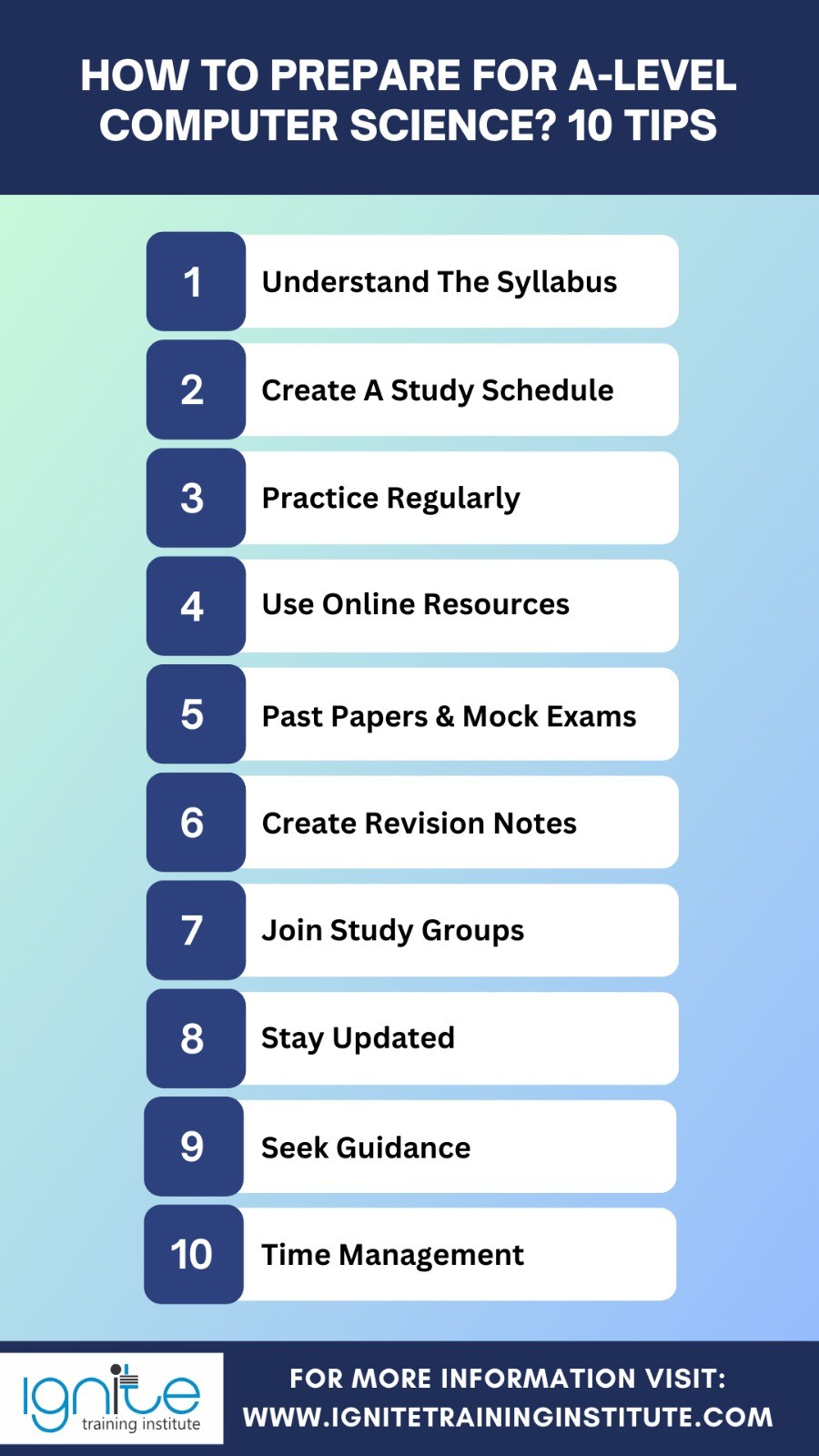
Preparing for A-Level Computer Science requires a strategic approach that balances theoretical understanding and practical application. Here are 10 tips to help you navigate your preparation successfully and excel in the subject.
1. Understand The Syllabus
- Break down the syllabus into individual topics and subtopics to get a clear picture of what you need to cover.
- Identify the weightage assigned to each topic to prioritize your study focus.
- Familiarize yourself with the assessment criteria, understanding how each topic contributes to your overall grade.
2. Create A Study Schedule
- Develop a weekly or monthly study schedule that aligns with your syllabus breakdown.
- Allocate specific time slots for each topic, considering their complexity and importance.
- Ensure your study schedule allows for breaks to avoid burnout and maintain productivity.
3. Practice Regularly
- Incorporate regular coding practice sessions into your routine, emphasizing a variety of programming languages and problem-solving techniques.
- Undertake projects that align with the topics you’re studying to reinforce theoretical knowledge through practical application.
- Engage with coding challenges on platforms like HackerRank or LeetCode to enhance your problem-solving skills.
4. Use Online Resources
- Explore coding tutorials on platforms like YouTube, Khan Academy, or freeCodeCamp to reinforce classroom learning.
- Participate in coding forums such as Stack Overflow to seek solutions to specific programming challenges and learn from others’ experiences.
- Utilize interactive educational platforms like Codecademy or Udacity for hands-on coding exercises and projects.
5. Past Papers & Mock Exams
- Regularly practice past papers to familiarize yourself with the exam format, question types, and difficulty levels.
- Take mock exams under timed conditions to simulate the exam environment and improve your time management skills.
- Analyze your performance in these practice exams to identify areas for improvement and adjust your study plan accordingly.
6. Create Revision Notes
- Summarize key concepts in concise revision notes, emphasizing core ideas and essential formulas.
- Use visual aids such as diagrams or charts to enhance your understanding and facilitate quick recall.
- Regularly review and update your revision notes as you progress through the syllabus.
7. Join Study Groups
- Engage with study groups or forums to discuss challenging concepts and share different problem-solving approaches.
- Collaborate on coding projects with peers to gain exposure to diverse coding styles and techniques.
- Teaching concepts to others within the study group can deepen your own understanding of the material.
8. Stay Updated
- Subscribe to blogs, newsletters, or podcasts that cover the latest trends and advancements in computer science.
- Follow influential figures in the field on social media platforms to stay informed about emerging technologies.
- Regularly check for updates to your course material or textbooks to ensure you’re learning the most current information.
9. Seek Guidance
- Don’t hesitate to reach out to your teachers, classmates, or online communities when you encounter challenging concepts.
- Attend extra help sessions or review sessions provided by your school or online platforms.
- Consider forming study partnerships with classmates to collaborate on problem-solving and reinforce each other’s understanding.
10. Time Management
- Practice answering exam-style questions under timed conditions to improve your efficiency during exams.
- Allocate time strategically, giving more time to questions that carry higher marks or require deeper analysis.
- Use techniques such as the Pomodoro Technique to maintain focus during study sessions and optimize time management.
Related: AQA VS CIE: A Closer Look Into The Examination Boards
Ignite Training Institute – #1 A-Level Computer Science Tutoring Support
Ignite Training Institute stands out as a premier destination for A-Level Computer Science tutoring support, earning its reputation as the top choice for students seeking excellence in their computer science education. With a commitment to delivering high-quality instruction and personalized guidance, Ignite Training Institute has become synonymous with academic success in A-Level Computer Science.
The institute boasts a team of experienced and highly qualified tutors who bring a wealth of knowledge and expertise to the learning environment. Whether students are navigating the intricacies of computational thinking, programming languages, or theoretical fundamentals, Ignite Training Institute provides a supportive and enriching educational experience.
Related: What Is AQA GCSE: A Detailed Overview For Students & Parents
FAQs
1. What Is A Level Computer Science Course?
The A-Level Computer Science course is an academic program that provides in-depth knowledge of computer science principles, programming, and problem-solving at an advanced level.
2. What Are The Hardest A Levels?
Determining the hardest A-levels is subjective, but A-levels in subjects like Further Mathematics, Physics, Chemistry, and Economics are often considered challenging due to their complex content and rigorous demands.
3. Why Choose Computer Science A Level?
Choosing Computer Science A Level equips students with essential programming and problem-solving skills, fostering a deep understanding of technology and preparing them for diverse career opportunities in the digital age.
Conclusion

In conclusion, the A-Level Computer Science course is not just about acing exams but about empowering students with vital theoretical insights and practical skills. In our tech-centric era, this course is instrumental in shaping individuals who can navigate the complexities of technology, fostering innovation, and contributing meaningfully to a rapidly evolving landscape.
Related: A-Levels VS CBSE: Comparing World’s Top Education Systems